Understand existing visibility
Ranking URLs, landing pages and content clusters from Search Console and analytics are prioritised before mapping – including traffic, conversion and indexing status.
SEO / GEO
A relaunch changes URLs, navigation, content and internal linking. These are precisely the signals search engines and AI-powered systems use to find and understand content. poudr therefore considers SEO and GEO as part of the relaunch, rather than an optimisation afterwards.

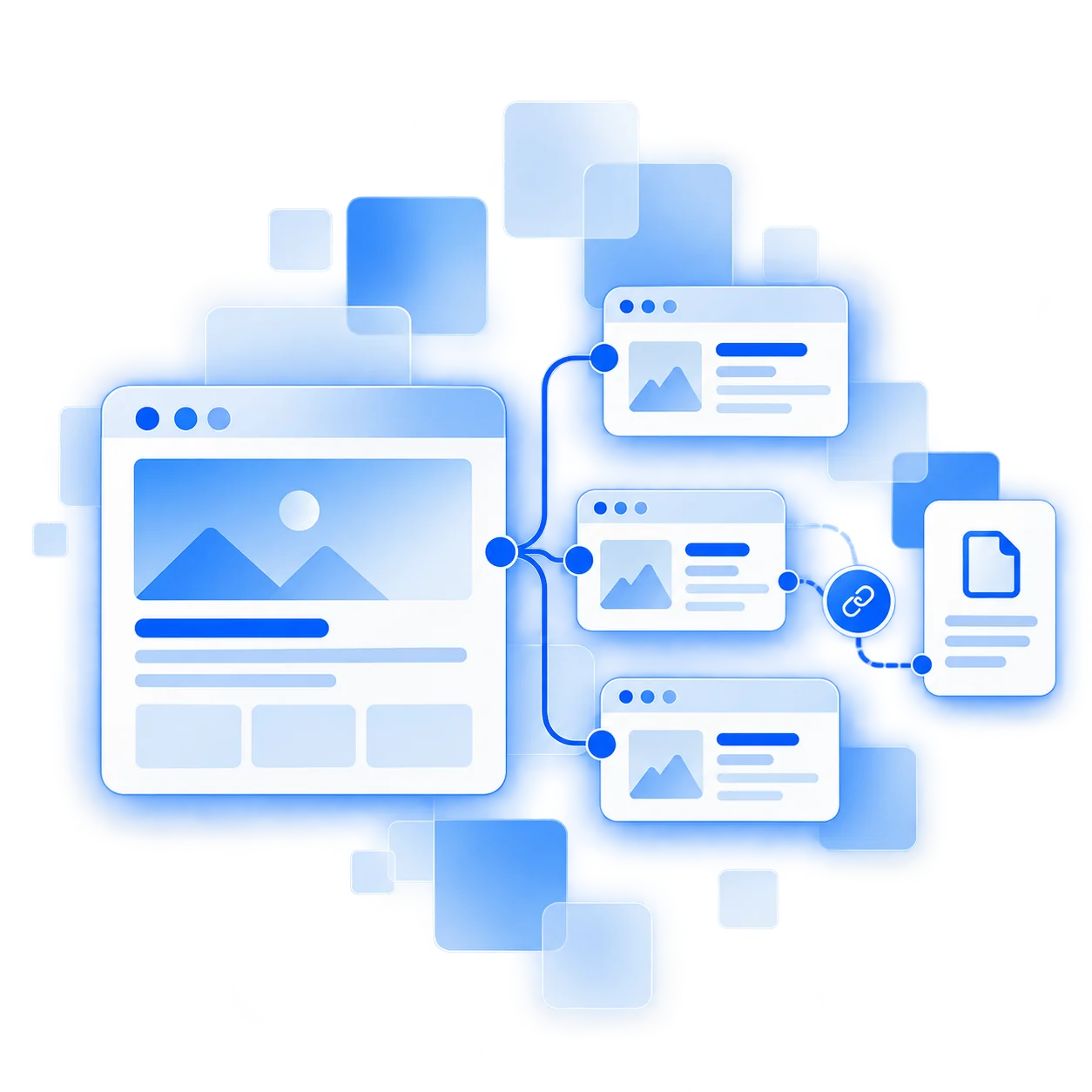
SEO & GEO in the relaunch
During a relaunch, information architecture, redirect planning, internal linking and metadata need to use the same target architecture. Otherwise, rankings, crawl paths and topical authority can be lost – even when the new website is technically complete.
poudr connects SEO and GEO with content migration: existing signals are captured, mapped to the new sitemap and prepared for traditional search and AI-powered answer systems.
Explore Website RelaunchSEO during a relaunch
From crawlability and redirect mapping to structured data and document SEO – an overview of the key opportunities.
Ranking URLs, landing pages and content clusters from Search Console and analytics are prioritised before mapping – including traffic, conversion and indexing status.
The new sitemap and page types should guide users and crawlers clearly through topics, hub pages and supporting content clusters.
Removed or changed URLs are directed to canonical destination pages through redirect mapping – including treatment of soft 404s and parameter URLs.
Internal links are adapted to the new page hierarchy rather than copied unchanged, preserving link equity and crawl paths.
Titles, descriptions and other on-page metadata are retained from existing content, consolidated or rewritten for the new page types.
Thin content, duplicate content and fragmented topic pages are consolidated into substantial destination URLs, rather than carrying weak pages forward individually.
PDFs, forms and brochures are connected as indexable assets with titles, context and destination pages – including document SEO and download assignment.
Schema.org markup, FAQ blocks and passages with clear answers are prepared for SERP features and Generative Engine Optimization (GEO).

GEO
GEO (Generative Engine Optimization) looks beyond traditional SERPs. It focuses on content that can not only rank, but also be understood and reliably evaluated by answer systems.
GEO does not replace SEO. For poudr, both perspectives belong to a modern content architecture.
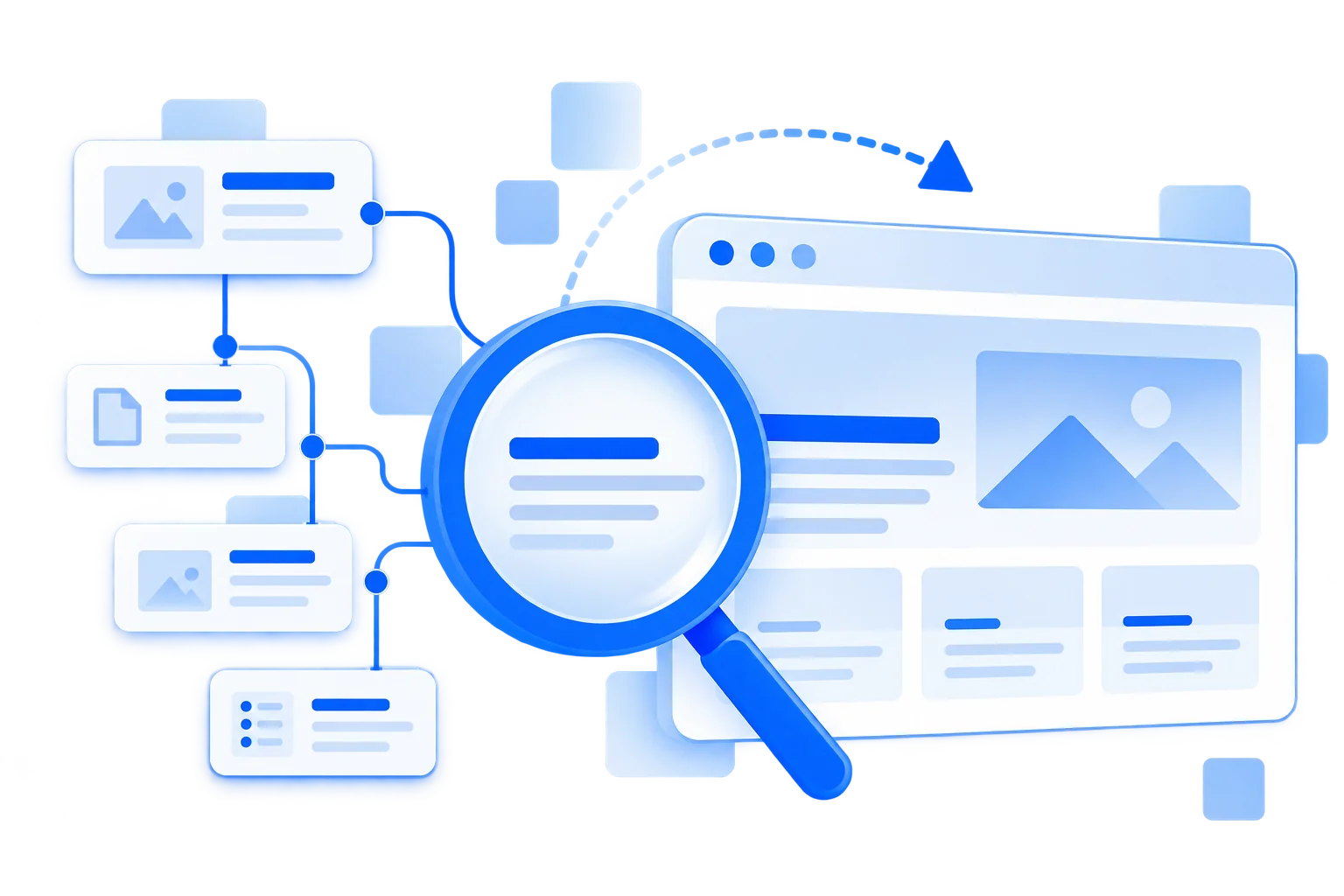
Content migration
A relaunch is an opportunity to secure SEO technically and improve the structure of existing content. AI content migration can help consider visibility and quality in the same process.
Typical migration contributions include capturing existing metadata, connecting internal links to new destinations, consolidating content for new destination pages, flagging missing or problematic structures and preparing FAQs and clearly structured answers.
Explore Content Migration
Your project. Our experience.
SEO, content structure and migration should use the same target architecture.
Discuss your project